
Profession - In the Shadows of the Streets: The Daily Life of Scrap Collectors

Profession - In the Shadows of the Streets: The Daily Life of Scrap Collectors
By Nasif Joomratty
Fri 12/12/2025 - 07:30
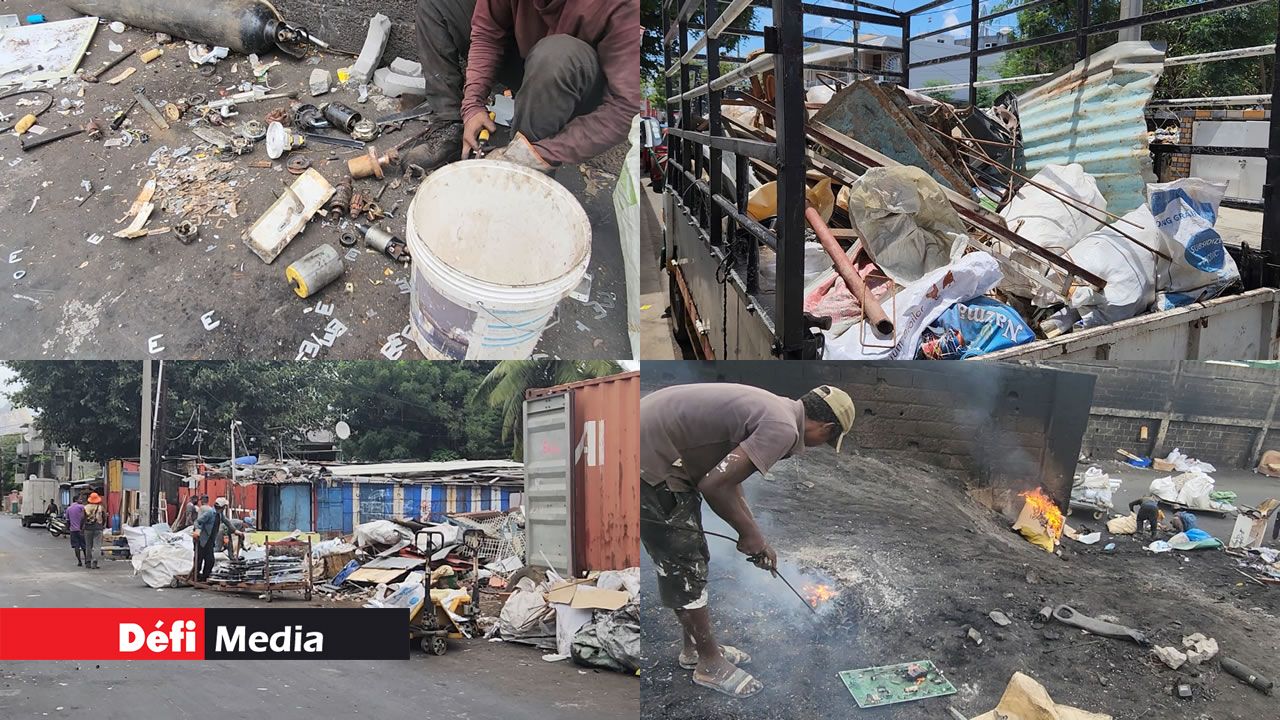
- Up to Rs 500 per day for a street collector
- Sale of scrap metal: between Rs 10 – Rs 350 per kilo
Every day, scrap collectors scour the streets and dumps to retrieve abandoned metals. Although their profession is invisible, it is essential for economic survival and local recycling efforts.
They often work anonymously, yet their presence is crucial for the cleanliness of our neighborhoods. Daily, in various regions across the country, scrap collectors navigate streets, alleys, vacant lots, and dumps to gather discarded metal items. From broken appliances and rusty sheets to engine carcasses, spare parts, burned cables, and construction debris, everything is meticulously collected, sorted, and sold for recycling.
Despite being undervalued in the eyes of the public, their work is an important part of the informal recycling chain in Mauritius. We visited the field to understand the daily operations of this business, following those who traverse the streets every day to collect what no one else wants but sustains their families.
In Sainte-Croix, the day begins early for scrap collectors. At dawn, some walk the streets while others ride bicycles, and a few use repurposed carts or wheelchairs to transport their finds. These improvised means are suited to a profession that allows no room for waste.
We meet Yancoon, a family man busy loading his wheelchair with scrap metal collected from an abandoned yard. For several years, this job has been his main source of income. “When I leave early, I can earn enough for a meal at home,” he explains. This young father relies entirely on this work to support his family due to a lack of other job opportunities.
Sweating profusely, he pushes a wheelchair filled with large metal pieces. Yancoon has found tubes, machine fragments, and car parts. He mentions that a good day can earn him up to Rs 500, but this isn’t always the case. “Some days, you get nothing. You have to search everywhere,” he confides, highlighting the unpredictable nature of his work.
For many, collecting scrap is not a voluntary choice but a necessity. It generates minimal income in a challenging economic context where job options are limited for certain segments of the population.
Once their loads are complete, collectors head to specialized depots. In Sainte-Croix, John, one of the collectors, opens the doors to his site, where scrap metal is processed throughout the day. He notes that despite the informal nature of this work, systematic checks are conducted. Each seller must provide clear explanations about the origin of the items to avoid purchasing stolen metals. “We conduct checks to prevent any issues. Everyone must explain how they obtained these items,” John assures.
Inside the depot, the scrap is weighed before being purchased. Prices vary by category: light iron, heavy iron, aluminum, steel, industrial parts, mechanical elements, or battery remains. The market fluctuates: some weeks, the price of copper rises, while other metals drop depending on the demand from local foundries and industries.
This stage is the heart of the scrap collectors' economic circuit. Collectors gather, sort, and prepare the items, while depots act as intermediaries between street work and recycling companies. Without these depots, reselling would be nearly impossible for many collectors.
A few kilometers away, at the Roche-Bois dump (Robust), near the waste collection station, another aspect of this activity is taking shape. Here, several people meticulously sift through piles of trash in search of metal scraps. Some have been working here for years and know exactly where and how to find valuable items.
The atmosphere is different here: the smell, dust, heat, and risk of accidents are part of daily life. Yet, this place remains crucial for many families who rely on this sorting to generate income. During this exploration, we learn that metal prices range from Rs 10 to Rs 300 per kilo, depending on the type. “Copper can be worth up to Rs 350, depending on whether it is yellow or red,” mentions a buyer.
Health Risks
In this same dump, several men have specialized in copper extraction. We see them removing insulation from electrical cables or dismantling electronic parts to extract the precious metal. Copper is highly sought after and sells at a higher price than other metals, earning it the nickname “Red Gold.”
Essential in sectors like electricity, plumbing, or electronics, this metal finds a second life through informal collection. Its significance in local recycling highlights the vital role these workers play, despite their lack of recognition.
However, this activity comes with many risks. Exposure to hazardous materials, deep cuts, infections, injuries to hands and feet, risks from handling heavy or rusty objects: safety is virtually non-existent. Most collectors work without gloves, proper shoes, masks, or any protective equipment.
The impact on respiratory health is real, according to those familiar with the field. “When I eat or drink, it feels like I'm tasting a mix of metal in my mouth,” says Beguino. He works in a depot and is skilled at burning cables to extract copper daily.
Mike, an experienced collector, confides, “This work makes people sick. There are many risks. But we have no other choice.” He believes that authorities should create a regulated, safer space for workers to carry out their activities without danger. He reminds us that scrap collection is a vital livelihood for many.
Despite its ecological and social importance, the work of scrap collectors remains largely invisible. They help reduce metal waste on public roads, feed a local recycling industry, and limit pollution from heavy metals. They are also an indispensable part of the informal economy, often the last lifeline for vulnerable households. Their contribution, though discreet, directly aids in cleanliness and recycling efforts in the country.